Home About Manufacturers Services Contact Us
Menu button

This website uses cookies...

Some of the cookies used on this site are essential. Others help to improve your experience by providing insights into how the site is being used.
Essential Cookies
Essential cookies enable critical functionality for the website to work (including your cookie preferences). The website cannot function correctly without these cookies and can only be disabled by changing your browser preferences
(not recommended).
Analytical Cookies
Analytical cookies help to improve the website by collecting and reporting information on its usage. No personally identifiable information is collected or stored and cannot be used to identify who you are. (The buttons above will automatically switch this on/off)
Changing your preferences
You can change your cookie preferences at any time by using the Cookie Preferences link at the bottom of this website.

Your cookie preferences...

Some of the cookies used on this site are essential. Others help to improve your experience by providing insights into how the site is being used.
Essential Cookies
Essential cookies enable critical functionality for the website to work (including your cookie preferences). The website cannot function correctly without these cookies and can only be disabled by changing your browser preferences
(not recommended).
Analytical Cookies
Analytical cookies help to improve the website by collecting and reporting information on its usage. No personally identifiable information is collected or stored and cannot be used to identify who you are. (The buttons above will automatically switch this on/off)
Microlab
Microlab
Microlab
Microlab

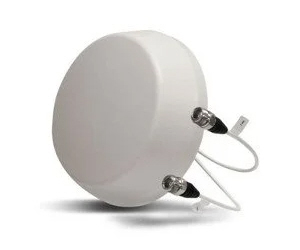
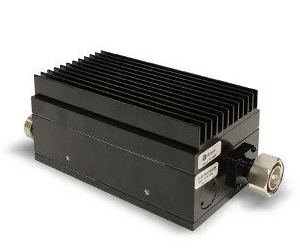
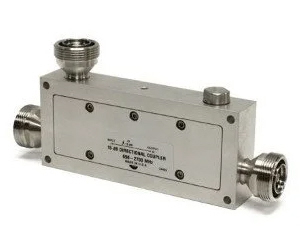
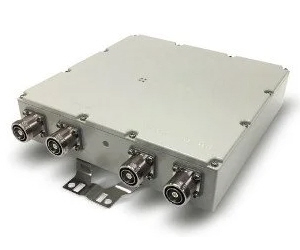
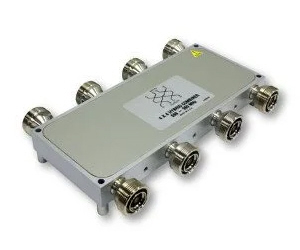
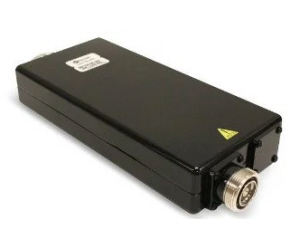
Microlab products are known worldwide for their superior performance and are considered the gold standard in RF and Microwave distribution systems. Microlab was founded in 1949. They design and manufacture high-performance RF components such as dividers, attenuators, tappers, directional couplers and filters. These components are generally:

Broadband - to allow future upgrades of enhanced wireless services

Low Loss - to increase signal strength for improved coverage

Low PIM - to minimize interference and improve system performance

Microlab products also include customized integrated solutions, neutral host DAS, Signal Conditioning, and active monitoring and control devices that are used for:

Combining high-powered signals from multiple carriers

High level monitoring and signal treatment

Cost-reduced usage of existing cellular infrastructure

Pre-tested and qualified systems packaged in convenient rack trays

Microlab products have been used in wireless infrastructure since the beginning of the industry. As a result, Microlab understand that industry requirements continually evolve. Microlab Engineers constantly develop new products to support new modulation schemes, frequencies, and other wireless infrastructure changes. Microab used that deep technical background in wireless, to release its first active component, the Active DAS Control Rack in 2014. It provides remote monitoring and level control between an RF source and a fiber DAS. Microlab now has an Engineering Group dedicated to Active Solutions.

VEX Files for Simulation
System simulation has become a vital part of DAS network design. The old methods of calculating coverage and link budgets with a spreadsheet are for most situations too difficult and prone to error as DAS systems become more complex. For this reason, Microlab produces VEX files for use with iBwave software, to greatly simplify your system design.
Passive Inter-Modulation (PIM) performance has become of much greater significance over last few years. All components in a wireless distribution network have the potential to cause signal distortion which reduces the overall system performance. A large proportion of Microlab products are specified as low PIM; typically this means a PIM figure of better than -155dBc (often it is much better than this). When comparing product specifications please ensure that you take account of the PIM figure before selecting a part.
For many years the default choice for DAS applications has been the N (Navy or Neill) connector. It's small, inexpensive, widely available and has an adequate performance for many applications. For higher power applications the DIN 7/16 connector is often specified. It has higher power handling capability with good PIM performance although it is physically large and more expensive than the N type. The PIM performance of both N and DIN 7/16 connectors rely on accurate torquing of the connections. A more recent introduction is the 4.3-10 connector which separates the electrical connection from the mechanical locking. It has excellent electrical performance regardless of the mechanical locking.

VEX Files for Simulation
System simulation has become a vital part of DAS network design. The old methods of calculating coverage and link budgets with a spreadsheet are for most situations too difficult and prone to error as DAS systems become more complex. For this reason, Microlab produces VEX files for use with iBwave software, to greatly simplify your system design.

Passive Inter-Modulation (PIM) performance has become of much greater significance over last few years. All components in a wireless distribution network have the potential to cause signal distortion which reduces the overall system performance. A large proportion of Microlab products are specified as low PIM; typically this means a PIM figure of better than -155dBc (often it is much better than this). When comparing product specifications please ensure that you take account of the PIM figure before selecting a part.

For many years the default choice for DAS applications has been the N (Navy or Neill) connector. It's small, inexpensive, widely available and has an adequate performance for many applications. For higher power applications the DIN 7/16 connector is often specified. It has higher power handling capability with good PIM performance although it is physically large and more expensive than the N type. The PIM performance of both N and DIN 7/16 connectors rely on accurate torquing of the connections. A more recent introduction is the 4.3-10 connector which separates the electrical connection from the mechanical locking. It has excellent electrical performance regardless of the mechanical locking.
Product Categories
Antennae
Attenuators
Couplers
Filters
Hybrid Matrices & Combiners
Splitters
Tappers
Terminations
We are a trusted partner

Through dedicated customer service, we strive to understand your business better. The more we know you, the more we can help. Some of our satisfied customers include: